Outdoor
Tent camping
Sleeping in a tent at a site you can reach without a long carry. Learn to pitch it at home, then spend one night where the rules allow a fire or say they do not.
Take it easy: learn your gear, keep it close.
Starts with gear
Safety Site rules and fire rules belong to the place you camp. Follow them, and pitch the tent once at home before the trip.
Let’s get started
This is the minimum starter list. It is not a full lesson.
Drive-up tent camping
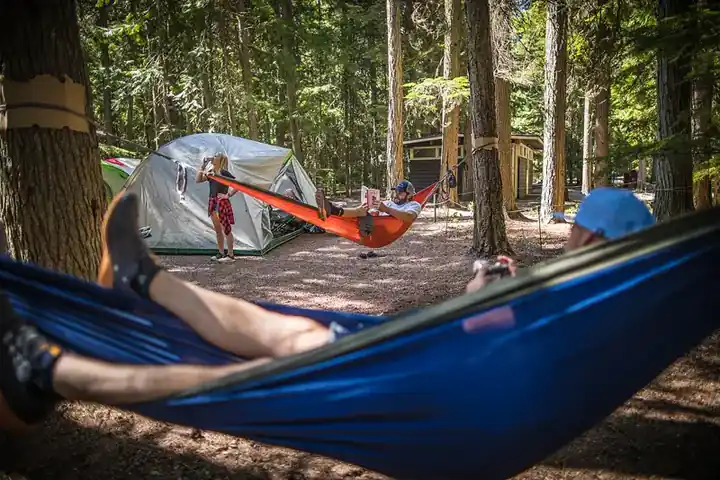
Want to hammock? Just swap it in over the tent. Use a camping hammock, wide tree-saver straps (not thin rope), a tarp for rain, and an underquilt or a pad under you for warmth.
Take it easy: learn your gear, keep it close.
What this is
Tent camping here is sleeping in a tent at a site you can reach without a long carry — a drive-up campground. It is not backpacking. If you want to hammock, swap a camping hammock in over the tent: wide tree-saver straps (not thin rope), a tarp for rain, and an underquilt or a pad under you for warmth. That swap is already noted on the site.
How to start
Pitch the tent at home once. Pack a pad, a bag or quilt, a light, a way to cook or a cooler, water, and layers for a cold night. Reserve or arrive early at a simple campground in a modest forecast. Practice guy-lines and a rain fly, not only a fair-weather inner tent.
Minimum starter total: about $200 to $400, checked Nov 9, 2026
Some links may earn a small commission at no extra cost to you. We never rank or pick gear based on payouts.
Weather shell at car-reachable site.
Search link for 3-season 2–4 person tent (opens in a new tab)
Sleeping bag ~30–40°F
Typical 3-season car-camp warmth.
Sleeping pad or air mattress
Comfort + insulation.
Search link for Sleeping pad or air mattress (opens in a new tab)
LED lantern + headlamp
Camp light.
Cooler
Food safety for perishables.
Propane camp stove
Optional if no-cook first night.
Safety Cook outside tent.
Learn the skills
A home pitch
Stake it, fly on, guylines out, in the yard, once, in daylight.
A first night
Arrive with enough daylight to pitch, cook or eat, and find the bathroom and the water before dark. Keep food stored as the campground requires.
Never use fuel-burning heaters or lanterns while sleeping in tents, campers or vehicles; carbon monoxide is colorless and odorless. source (opens in a new tab)
Safety
- Never heat the tent with a stove or a grill — carbon monoxide and fire.
- Guy the tent if wind is possible. Do not camp in a drainage you would not want to sleep in if it rained.
- Food storage follows the campground's rules. Fires only where allowed, fully out before you sleep or leave.
- Leave No Trace still applies in a campground.
First project
One night in a drive-up campground, after a home pitch, in a modest forecast. That is the first outing.
Next step
A second night, possibly in lighter rain if you are comfortable, still drive-up. Backpacking is a different hobby page.
Learn it
Build your skills
Ready when. You have camped in the starter tent and you want to sleep warmer, cook more easily, or handle weather a little better — not a new camping identity.
Keep using from Level 1
- 3-season 2–4 person tent
- Sleeping bag ~30–40°F
- Sleeping pad or air mattress
- LED lantern + headlamp
- Cooler
Skill before gear
A night in the kit you have, and an honest note about what was actually cold or annoying
Before you buy. A four-season tent or a full kitchen box as a first upgrade
Sleep and stove practice beat a new shelter. Most first upgrades are the pad or the stove you skipped.
Worth upgrading now
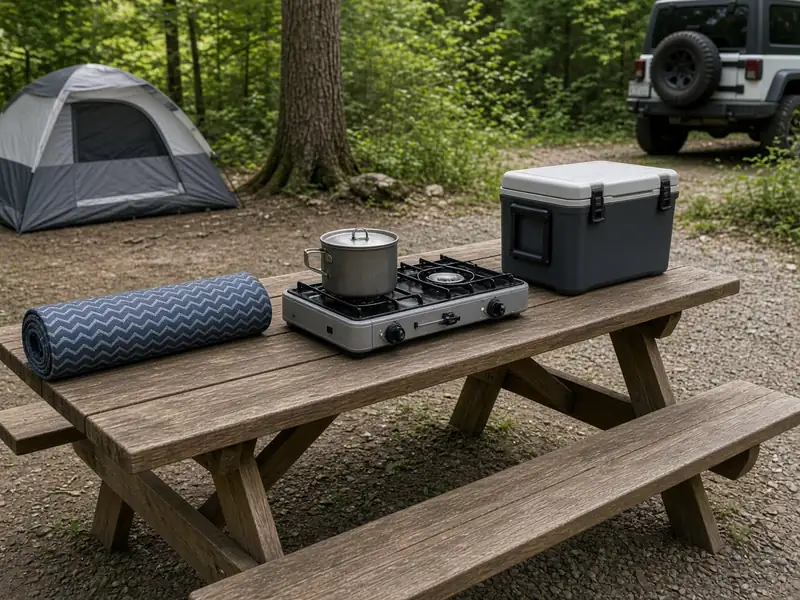
A sleeping pad with a real R-value for the nights you actually take
Unlocks. Warmer, more even sleep under the bag you already have.
This can replace: Sleeping pad or air mattress
The usual comfort and warmth upgrade. Air mattresses often sleep cold on the ground.
about $40 to $180, checked Nov 27, 2026
A sleeping pad with a real R-value for the nights you actually take (opens in a new tab)Search linkA simple propane camp stove, if you skipped it in Level 1, plus a pot you already own if it fits
Unlocks. A reliable camp kitchen in places that allow stoves.
This can replace: Propane camp stove
Breakfast and hot water without a fire. Practice in the yard first.
about $30 to $80, checked Nov 27, 2026
A simple propane camp stove, if you skipped it in Level 1, plus a pot you already own if it fits (opens in a new tab)Search linkA modest tarp or the tent's vestibule used as a kitchen roof, with guylines you have practiced
Unlocks. A drier cooking and sitting space in wind or light rain.
Keeps weather off the stove and the sitting area. A huge kitchen shelter can wait.
about $20 to $70, checked Nov 27, 2026
A modest tarp or the tent's vestibule used as a kitchen roof, with guylines you have practiced (opens in a new tab)Search link
Better materials
Fuel you have measured for a weekend, plus a couple of simple meals that do not need a chef's kit
Unlocks. Hot food you can actually make tired, in the weather you booked.
A stove without fuel, or a menu you have never cooked, is a plan that only works in the driveway.
about $10 to $30, checked Nov 27, 2026
Fuel you have measured for a weekend, plus a couple of simple meals that do not need a chef's kit (opens in a new tab)Search link
How to
Upgrade sleep by R-value and real nights
Upgrade the sleep system by R-value and temperature you have already been cold in, not by a new tent. A warmer pad under the bag you have often does more than a new bag alone.
First time with the Sleeping pad with a real R-value: Put the pad under the bag you have, and see whether the night is warmer before you buy a new bag.
What it is. A pad chosen for the ground temperature you have already been cold on.
Hold / set up. Put the pad under the bag you have, and see whether the night is warmer before you buy a new bag. source (opens in a new tab)
A colder pad under a warm bag still sleeps cold. source (opens in a new tab)
Upgrade from nights you have already taken, not from a catalog rating alone. source (opens in a new tab)
Practice the stove and a simple tarp kitchen
A stove and a simple tarp or kitchen setup are skills: practice in the yard, keep fuel you have measured, and cook out of the wind. A bigger tent will not make breakfast faster.
First time with the Camp stove and simple kitchen: Practice in the yard, measure fuel, and cook out of the wind. Keep the stove stable and away from tent walls.
What it is. A propane camp stove and a practiced, modest kitchen setup.
Hold / set up. Practice in the yard, measure fuel, and cook out of the wind. Keep the stove stable and away from tent walls. source (opens in a new tab)
A bigger tent will not make breakfast faster. source (opens in a new tab)
Know the fire and stove rules of the site. source (opens in a new tab)
Projects, in order
1. A weekend with a warmer pad, and notes on whether the bag was actually the problem
A weekend
You’ll learn. Honest sleep
Upgrade the sleep system by R-value and temperature you have already been cold in, not by a new tent. A warmer pad under the bag you have often does more than a new bag alone.
First time with the Sleeping pad with a real R-value: Put the pad under the bag you have, and see whether the night is warmer before you buy a new bag.
What it is. A pad chosen for the ground temperature you have already been cold on.
Hold / set up. Put the pad under the bag you have, and see whether the night is warmer before you buy a new bag. source (opens in a new tab)
A colder pad under a warm bag still sleeps cold. source (opens in a new tab)
Upgrade from nights you have already taken, not from a catalog rating alone. source (opens in a new tab)
2. A yard practice of the stove and tarp, then a camp breakfast
An evening plus a morning in camp
You’ll learn. Camp kitchen
A stove and a simple tarp or kitchen setup are skills: practice in the yard, keep fuel you have measured, and cook out of the wind. A bigger tent will not make breakfast faster.
First time with the Camp stove and simple kitchen: Practice in the yard, measure fuel, and cook out of the wind. Keep the stove stable and away from tent walls.
What it is. A propane camp stove and a practiced, modest kitchen setup.
Hold / set up. Practice in the yard, measure fuel, and cook out of the wind. Keep the stove stable and away from tent walls. source (opens in a new tab)
A bigger tent will not make breakfast faster. source (opens in a new tab)
Know the fire and stove rules of the site. source (opens in a new tab)
I know what I’m doing-ish
Four-season and dispersed camping are weather, water, and leave-no-trace problems. A sturdier shelter helps only if you can guy it and pick a site.